
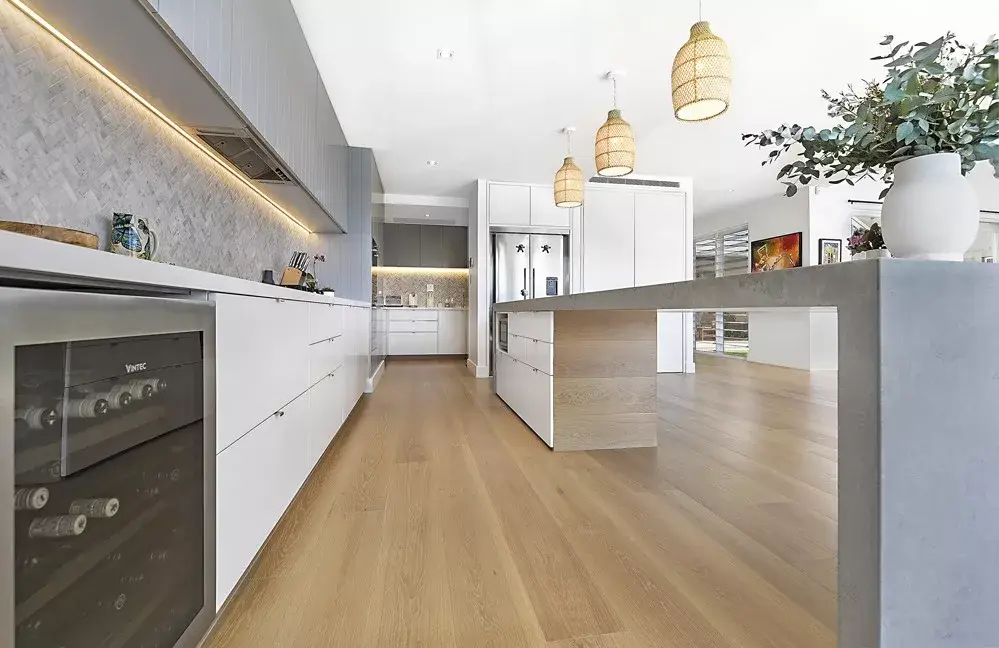
Choosing the right flooring for your home is one of the more significant decisions you will make during a renovation or new build, and understanding Timber vs Hybrid Flooring is essential for modern Australian homes. With so many options available today, the debate around which is better continues to grow.
Both options have real strengths, and both come with genuine trade-offs. This guide is designed to help you understand the key differences so you can make an informed choice based on your lifestyle, your home’s conditions, and your long-term goals.
Whether you are exploring timber floors Gold Coast properties or looking at newer hybrid solutions, understanding what each product offers the starting point for any good flooring decision is.
What Is Timber Flooring?
Timber flooring refers to boards made from natural wood, either solid hardwood or engineered timber. Solid timber is milled from a single piece of wood, while engineered timber flooring uses a real hardwood veneer bonded to a stable plywood core. Both options deliver the warmth, character, and visual appeal that natural wood is known for.
Timber flooring has been used in homes for centuries and remains one of the most desirable flooring choices among homeowners and interior designers. The variation in grain, colour, and texture means no two floors look the same, which is a quality that manufactured products struggle to replicate authentically.
Engineered timber floors Gold Coast homes have become particularly popular because engineered timber handles the coastal climate conditions better than solid hardwood, offering improved dimensional stability in environments with higher humidity and temperature fluctuations.
What Is Hybrid Flooring?
Hybrid flooring is a relatively newer product that combines the construction principles of laminate and vinyl to create a rigid, water-resistant plank. It typically consists of four layers: a UV-coated wear layer, a decorative print layer, a rigid core (often stone polymer composite or wood polymer composite), and an acoustic underlay attached to the bottom.
Hybrid flooring is designed to mimic the look of timber while offering enhanced resistance to water, scratches, and everyday wear. It is manufactured entirely from synthetic materials, which means it is consistent in appearance and dimensions across every plank. As a product category, hybrid has grown rapidly in Australia over the past decade because it addresses practical concerns that natural timber can sometimes present in high-traffic or moisture-prone areas.
Flooring Durability Comparison: Which Lasts Longer?
When it comes to a straightforward flooring durability comparison, both timber and hybrid perform well, but in different ways. Solid timber and engineered timber floors, when properly maintained, can last several decades.
A quality hardwood floor can be sanded back and refinished multiple times over its life, effectively resetting its surface appearance. This makes timber an exceptionally long-term investment when it is installed in the right environment and cared for consistently.
Hybrid flooring is highly resistant to surface scratches and dents, and its rigid core construction means it holds up well under heavy foot traffic. However, because the decorative layer is a printed film rather than real wood, it cannot be refinished. Once the wear layer is compromised, the plank needs to be replaced rather than restored.
For a flooring durability comparison over a 30-year horizon, well-maintained timber generally outperforms hybrid flooring, particularly in living areas, bedrooms, and hallways where surface refinishing is a viable option.
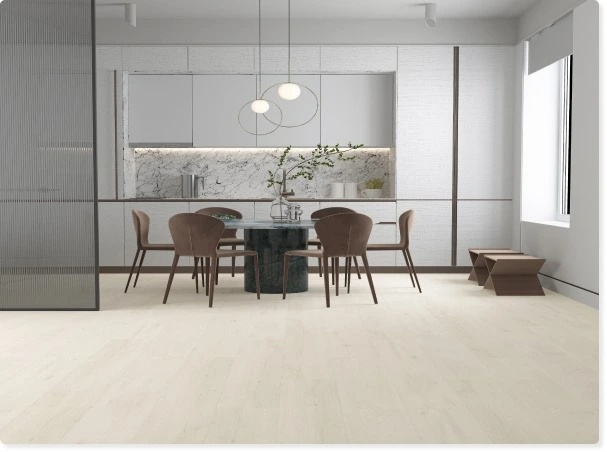
Water-Resistant Flooring Options: How Do They Compare?
One of the biggest practical advantages hybrid flooring holds over timber is water resistance. Hybrid planks are highly water-resistant throughout their construction, handling things like water spillage far better than timber flooring.
Timber flooring, even engineered varieties, have some degree of water resistance. Engineered timber handles moisture better than solid hardwood because its plywood core is more dimensionally stable, but prolonged exposure to standing water will still cause damage over time. For areas with high moisture exposure, timber requires careful installation with proper sealing and should not be used in wet rooms without appropriate precautions.
If high water-resistance flooring options are a primary requirement for your home, hybrid flooring has a clear advantage.
When exploring water-resistant flooring options, it is also worth considering the subfloor conditions in your home. Both products can be affected by moisture rising from below, so subfloor preparation is important regardless of which surface material you choose.
Engineered Wood vs Hybrid: Understanding the Middle Ground
The engineered wood vs hybrid comparison is worth examining on its own because engineered timber often gets positioned as a compromise between solid hardwood and fully synthetic products. It is a distinct product with its own strengths.
Engineered timber uses a genuine hardwood veneer, which means the surface layer you walk on is real wood. The grain, texture, and warmth are authentic, not printed. This matters both aesthetically and in terms of how the floor ages. Engineered timber develops a natural patina over time that many homeowners find more appealing than a surface that looks the same as it did on the day of installation.
In the engineered wood vs hybrid debate, hybrid flooring wins on practicality and ease of installation. It requires less acclimatisation before installation and is faster to install. Engineered timber, however, wins on aesthetics, longevity, and the property value it tends to add to a home.
For homeowners comparing wooden floors Gold Coast options, engineered timber is often the recommended choice for main living areas and open-plan spaces where the visual quality of the floor makes a meaningful difference to the overall feel of the home.
Comfort, Feel, and Acoustics
One aspect of flooring that often gets overlooked in product comparisons is how a floor feels underfoot and how it performs acoustically. Timber flooring, both solid and engineered, has a natural warmth and slight give that many people find more comfortable than harder synthetic surfaces. In cooler months, timber retains warmth in a way that vinyl-based products do not.
Hybrid flooring includes a pre-attached underlay, which helps with sound absorption and adds a degree of cushioning. This makes it more comfortable than older laminate products, but it still does not fully replicate the feel of walking on real timber.
If comfort and acoustic performance are important considerations in your decision, particularly in multi-level homes or properties with open-plan living, timber flooring generally provides a more pleasant underfoot experience.
Installation and Maintenance Considerations
Both timber and hybrid flooring are available from reputable, timber floor suppliers and flooring shops Gold Coast homeowners can visit to see and feel the products in person before deciding.
Hybrid flooring is generally faster and easier to install. Its click-lock floating system means it can go over most existing subfloors subject to the levels being within tolerance, and it does not require adhesives.
Engineered timber installation takes more preparation. Depending on the product and subfloor, it may be glued, nailed, or floated. Professional installation is strongly recommended for engineered timber to ensure the floor performs correctly over its lifetime.
In terms of day-to-day maintenance, both products are relatively easy to care for. Regular sweeping or vacuuming and occasional damp mopping is sufficient for hybrid floors. Timber floors benefit from the same routine but should not be exposed to excess water during cleaning. Timber floors also benefit from periodic re-coating to protect the surface and maintain their appearance over time.
Which Flooring Is Right for Your Home?
There is no single answer to timber vs hybrid flooring which is better because the right choice depends on where the floor is going, how the space is used, and what matters most to you as a homeowner.
Timber flooring is the stronger choice if you prioritise natural aesthetics, long-term value, the ability to refinish the surface, and a warm, authentic feel underfoot. It is particularly well-suited to living rooms, dining rooms, bedrooms, and formal spaces where the quality of the material adds to the overall character of the home.
Hybrid flooring is the stronger choice if you need a high water-resistant surface, are working with a tighter budget, want a faster installation, or are fitting out high-traffic areas where scratch resistance is a priority. It is also a practical option for investment properties or spaces where durability and ease of replacement are more important than aesthetics.
For commercial wood flooring applications, the decision often depends on the type of business, foot traffic levels, and whether moisture exposure is a factor. Both products are used in commercial settings, and the right choice varies considerably depending on the environment.
Many homeowners across timber flooring in Gold Coast areas choose to use both products in the same home, matching each floor type to the specific demands of each space rather than applying one solution throughout.
Making a Confident Flooring Decision
Understanding timber vs hybrid flooring which is better for your specific situation comes down to an honest evaluation of your home, your lifestyle, and your priorities. Neither product is universally superior; both have earned their place in modern Australian homes for good reasons.
If you are still uncertain about which direction to go, visiting a showroom and seeing both products in person can make a significant difference. Being able to walk on a sample, examine the surface quality, and hold the planks in your hand gives your insight that no product description can fully capture.
For homeowners across the Gold Coast region, Harmony Timber Floors offers a wide range of both timber and hybrid flooring options, along with the expertise to help you choose what truly suits your home not just the current trend. Contact us today to discuss your flooring needs or visit our showroom to explore your options in person.
Frequently Asked Questions
1. Is timber or hybrid flooring better for homes with pets?
Hybrid flooring resists scratches and moisture better, making it practical for pet owners. Timber can be refinished if scratched. Both work well depending on your maintenance commitment.
2. Does timber flooring add more resale value than hybrid?
Generally, yes. Real timber floors are viewed favourably by buyers and can positively influence property value, particularly engineered timber in main living areas of a home.
3. How long does hybrid flooring last compared to timber?
Hybrid flooring typically lasts 15 to 25 years. Quality timber floors can last 30 to 50 years or longer, especially if the surface is periodically sanded and recoated properly.
4. Which flooring is easier to install, timber or hybrid?
Hybrid flooring installs faster with a simple click-lock float system. Engineered timber is a bit more complicated to install and may well require the services of a professional installer for best long-term results and performance.